Thursday, January 10, 2019

Business Connection or Pyramid Recruit?


Business Connection or Pyramid Recruit? 

By Corinne Jameson-Kuehl, RDH, Owner

It's that time of year where everyone is making goals and excited about achieving them. Statistics show within 6 months of the new year, only 9% of those who make resolutions actually stick to the goals they make.

Many of us start the year off strong with goals to make new and better business connections. We look to align ourselves with businesses that share similar philosophies and modes of action. It makes sense to be attracted to growth-minded people that will drive business and assist potential mutual clients to success. What doesn't make sense is when individuals want to connect for the purpose of pushing their home-based business product, or for the self-serving goal of gaining your hard earned network list.

It is wise to approach any new business connection invitation with the following cautions:

           1. What is the mutual purpose of making this connection?

           2. Will this new connection take away time and energy from my vision and values of what  
               goals I am looking to accomplish?

If there is any doubt on the intention of the new connection, simply ask them why they would like to connect with you. This question will help you make an efficient and advantageous decision immediately.

Friday, January 4, 2019

By Corinne Jameson-Kuehl, RDH, DrBicuspid.com contributing writer
It's that time of the year again with lighter schedules, last-minute patient cancellations, and the dreaded no-shows, which means team members walking around the office acting like zombies and seeking "something to do."
Corinne Jameson-Kuehl
Corinne Jameson-Kuehl, RDH.
There will be holes in your schedule if you allow the following five devaluing phrases said to patients and attitudes into your practice:
  1. "Do you want to reschedule?"
  2. "What time works?"
  3. "If you can't make it, no problem. Just give us a call."
  4. "You can wait to have that procedure until next year."
  5. "Do you want to just call us?"
It is the entire dental team's responsibility to prevent the scheduling holes and evaluate how the scheduling communication is occurring. The commitment to patient retention and engagement while desiring full schedules at all times should be the obvious office goal. Being aware to "create the appointment demand" and to "build off the schedule" will lead your patients to respect their appointed time, and your day will end with a successful and productive schedule.
Best practices
The best way to implement the expectation that appointments are to be scheduled in advanced is to start with new patients. The new-patient letter should detail your appointment expectations and how you provide reserved appointment times as a courtesy to the patient's schedule.
“It is the entire dental team's responsibility to prevent the scheduling holes and evaluate how the scheduling communication is occurring.”
Establish the scheduling of the next appointment as the norm by leading all patients into scheduling at the patient walkout/dismissal. In a friendly tone with the importance of their time emphasized, ask your patients, "Now, let's get you scheduled for your next visit. Do you prefer a morning or an afternoon appointment?"
Once the first appointment of the day is established, build off your schedule by offering the best fit for your patient's request while simultaneously filling your schedule.
Get into the habit of knowing your patients' work and personal schedules, so it is easier to lead the appointment conversation. Someone who is a stay-at-home parent or a retiree may have a more flexible daily schedule and could be scheduled at those hard-to-fill appointments times, such as 10 a.m. or 2 p.m.
Building off the most popular times is the best way to fill your day. For example, if you look at a certain day and notice your 7 a.m. and 4 p.m. slots are already filled by consistently reliable patients, offer the 8 a.m. and 3 p.m. and so forth.
Time frames
Continue to set patterns by scheduling patients in the same time frame. For example, keeping the continuing care appointments the same day and same time six months apart will establish the long-term date, such as creating the standard Tuesdays at 11 a.m.
Setting a behavior pattern also ensures a more successful remembrance by patients and makes a cancel or no-show less likely. You can also use a third-party system, such as Solutionreach or Lighthouse 360, to kindly remind patients of their scheduled appointment time, while meeting the patients' preferred electronic communication style.
Emphasizing the "busyness" of your office schedule is important. Whether you are incredibly busy or not, it doesn't matter. It's important to create the demand and teach patients to understand how important their reserved appointment time is. They should understand that it may be challenging to get another visit scheduled with their favorite hygienist if they cancel.
Options for scheduling
Your team has to let patients know the standard in the office is scheduling hygiene visits. Remind them that the office does this for all patients as a courtesy so that the most convenient time for the patient can be secured.
The following are good options for moving the conversation forward:
  • "We can always follow up and can provide a reminder if you need one."
  • "Let's get you scheduled, and then would you please kindly check your schedule and call me back tomorrow if that date and time does not work for you?"
  • "I would be happy to call/text/email you tomorrow. When would be a good time to discuss your appointment?"
When patients say, "I don't know where I'll be in six months," your staff can say something playful, such as, "I know where you will be. Here again with me, same place, same time. Now let's get you scheduled."
No matter the scheduling conversation, it is imperative the clinical and administrative teams communicate through both detailed chart notes and verbally with the patient at the end of the visit. This will ensure excellent customer care and that no questions are left unanswered.

Because you value and respect your patients' time, teaching them the value of respecting the scheduled appointment will prove to be an effective way to diminish the holes from your schedule.


“Custom Dental Solutions empowers business owners to grow their business THEIR way.”— Corey Jameson-Kuehl, Owner

Wednesday, October 3, 2018

Dental Hygiene Lead (Hygiene License Required) Brookfield, WI Area

Our diverse and fast-paced practice seeks an experienced RDH to lead our dental hygiene department to excellence. This practice is under new management along with a new, ethical and enthusiastic team to support our dental hygiene department to the fullest!

Bi-Lingual is a plus, but not required. 


This practice is going through many upgrades -- This is a competitive and changeling position so if you are seeking a stimulating career -- then we are the right fit!

*We are looking for someone flexible for 35 - 40 hours a week Monday - Friday. We are offering a $1000 hiring bonus post 90 days. We offer Paid CE, Paid Vacation, Retirement and a generous family dental plan.

Competitive Wages!!!

We have full-time, part-time, and temping spots open.

Please send your resume to
Corey@CustomDentalSolutions.com

Monday, September 17, 2018

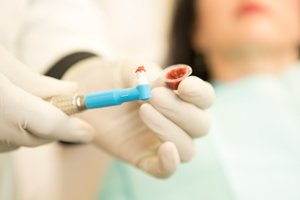
Reprocessing Dental Handpieces

Reprocessing Dental Handpieces 

By Dr. Katherine Schrubbe, RDH, BS, MEd, PhD.

Compliance with CDC guidelines for reprocessing is vital to the safety of the dental staff and patients.


There seems to be a lot of buzz about dental handpieces these days. For whatever reason, the question of reprocessing these devices for patient use is once again a popular conversation in dental practices. Dental handpieces are medical devices accompanied by instructions for use (IFU). As discussed in a previous article, IFU are provided for medical devices and products in accordance with federal Food and Drug Administration (FDA) standards and provide information on cleaning, disinfection and 1 In any dental setting, IFUs must be strictly followed to ensure patient safety, as well as peak performance of the devices. Whether the organization is a DSO, a large group practice or a solo practice, there must be a sufficient number of instruments to serve the patient schedules in order to avoid shortcuts in reprocessing.
sterilization of patient care items.

Categories of patient care items
The Centers for Disease Control and Prevention sorts patient care items into three categories (referred to as the Spaulding classification), based on the potential risk for infection associated with their intended use: critical, semicritical or noncritical.2,3

Centers for Disease Control and Prevention. Guidelines for Infection Control in Dental Health-Care Settings – 2003. MMWR 2003;52(No. RR-17); 20.

At the ends of the spectrum are the critical and noncritical patient care items. According to the CDC, all critical items should be heat sterilized between patient use, as they have the greatest risk of transmitting infection. Noncritical items, which pose the least risk of disease transmission, should be cleaned and disinfected with an EPA-registered hospital disinfectant.2,4
In the middle of the spectrum are semicritical items. These items come in contact with mucous – or non-intact – membranes, but they do not penetrate soft tissue, contact bone, the bloodstream or other normally sterile tissues.2

Dental handpieces are considered semicritical items. The CDC states, “dental handpieces and associated attachments, including low-speed motors and reusable prophylaxis angles, should always be heat sterilized between patients and not high-level or surface disinfected.  Although these devices are considered semicritical, studies have shown that their internal surfaces can become contaminated with patient materials during use. If these devices are not properly cleaned and heat sterilized, the next patient may be exposed to potentially infectious materials.”4,5,6


In other words, there are no shortcuts to patient safety around handpieces, including low-speed motors use primarily for hygiene appointments. Eleven states require heat sterilization of dental handpieces: California, Florida, Indiana, Kansas, Missouri, New Mexico, Ohio, Oregon, South Carolina, Virginia, and Washington.7 And, the CDC guidelines fully apply in the remaining 39 states. Additional guidance from the CDC states, “handpieces and other intraoral devices that can be removed from the air and waterlines of dental units should be cleaned and heat-sterilized between patients. Follow the manufacturer’s instructions for cleaning, lubricating, and sterilizing these devices. These devices include high-speed, low-speed, electric, endodontic, and surgical handpieces, as well as all handpiece motors and attachments, such as reusable prophylaxis angles, nose cones, and contra-angles.”8

The updated guidance from the CDC provides a 3-point summary:
  1. Clean and heat sterilize handpieces and other intraoral instruments that can be removed from the air lines and waterlines of dental units.
  2. For handpieces that do not attach to air lines and waterlines, use FDA-cleared devices and follow the validated manufacturer’s instructions for reprocessing these devices.
  3. If a dental handpiece cannot be heat sterilized and does not have FDA clearance with validated instructions for reprocessing, do not use that device.9
Dr. Katherine Schrubbe, RDH, BS, M.Ed, PhD


References
  1. Schrubbe K. Instructions for use. Efficiency in Group Practice. Available at http://www.dentalgrouppractice.com/instructions-for-use.html. Accessed April 24, 2018.
  1. Centers for Disease Control and Prevention. Guidelines for Infection Control in Dental Health-Care Settings — 2003. MMWR 2003;52(No. RR-17); 20.
  1. Miller CH, Palenik CJ. Infection Control and Management of Hazardous Materials for the Dental Team. 5th ed. St. Louis: Mosby Elsevier; 2013; 122.
  1. Centers for Disease Control and Prevention. Summary of Infection Prevention Practices in Dental Settings: Basic Expectations for Safe Care. Atlanta, GA: US Department of Health and Human Services, Centers for Disease Control and Prevention, National Center for Chronic Disease Prevention and Health Promotion, Division of Oral Health, March 2016.
  1. Chin J.R., Miller C.H., Palenik, C.J. (2006). Internal contamination of air-driven low-speed handpieces and attached prophy angles. J Am Dent Assoc. 137(9):1275-80. Available at http://www.ncbi.nlm.nih.gov/pubmed/16946433. Accessed May 10, 2018.
  1. American Dental Association. Oral health topics; infection control. Available at https://www.ada.org/en/member-center/oral-health-topics/infection-control-resources. Accessed May 10, 2018.
  1. The Dental Student Network list of state licensing agencies. Available at http://www.studentdoctor.net/dental/state_boards.html. Accessed April 24, 2018.
  1. Centers for Disease Control and Prevention. Dental Handpieces and Other Devices Attached to Air and Waterlines. Available at https://www.cdc.gov/oralhealth/infectioncontrol/questions/dental-handpieces.html. Accessed May 10, 2018.
  1. Centers for Disease Control and Prevention. Statement on Reprocessing Dental Handpieces, April 11, 2018. Available at https://www.cdc.gov/oralhealth/infectioncontrol/statement-on-reprocessing-dental-handpieces.htm. Accessed May 10, 2018.
  1. US Department of Health and Human Services. Public Health Service Food and Drug
    Administration. Reprocessing Medical Devices in Health Care Settings: Validation Methods and Labeling Guidance for Industry and Food and Drug Administration Staff. March 17, 2015. https://www.fda.gov/downloads/medicaldevices/deviceregulationandguidance/guidancedocuments/ucm253010.pdf.  Accessed May 10, 2018.
  1. Vavrosky K. 5 infection control mistakes you may be making and not even realize. Dental Products Report, July 11, 2016. Available at http://www.dentalproductsreport.com/hygiene/article/5-infection-control-mistakes-you-may-be-making-and-not-even-realize?page=0,1.  Accessed May 10, 2018.


Sunday, August 12, 2018

5 Things to Remember if You Want to be SUCCESSFUL


5 Things to Remember if You Want to be SUCCESSFUL

By:  Angela M. Henke


1.  Make Long Term Goals
Setting your daily and monthly schedule will contribute to your long terms goals.  Small continuous improvements every day will make the largest difference overtime.


2.  Give up Making Excuses
Successful people know what their responsibilities are every day, every week and every month.  Sometimes this means asking others for help so you do not fall behind in your responsibilities – do not make excuses.  Learn from your failures.  Knowing your weakness is part of your success. 


3.  Say Good-Bye to the Need to Control Everything
Controlling everything is not necessary nor is it productive.  Do your best to make situations better but also realize when it is out of your control.  What you can control in every situation is your emotions and your attitude, even if that means stepping away for a period of time. 
“Some things are up to us, and some things are not up to us.” - Epictetus

4.  Learn to Say NO
Successful people understand that they cannot say yes to everything or everyone.  There will be times saying NO is in your best interest.  Learn to pick and choose the activities that will grow you personally and professionally.  Sacrifice short-term for the big picture. 


5.  You Will NOT Always be Liked
Not every person is a fit for every personality at a practice or in a company.  Learn to always put the best person forward even if sometimes that may not be you.  Think of yourself as a market niche.  There will be some people who like that niche, who need that niche, and there will be others that do not like it or need it.  Remember it is not personal; it is business and you cannot please everyone. 

Remain true to yourself personally and professionally.